
Retail & CPG
From Product Performance to Premium Desire

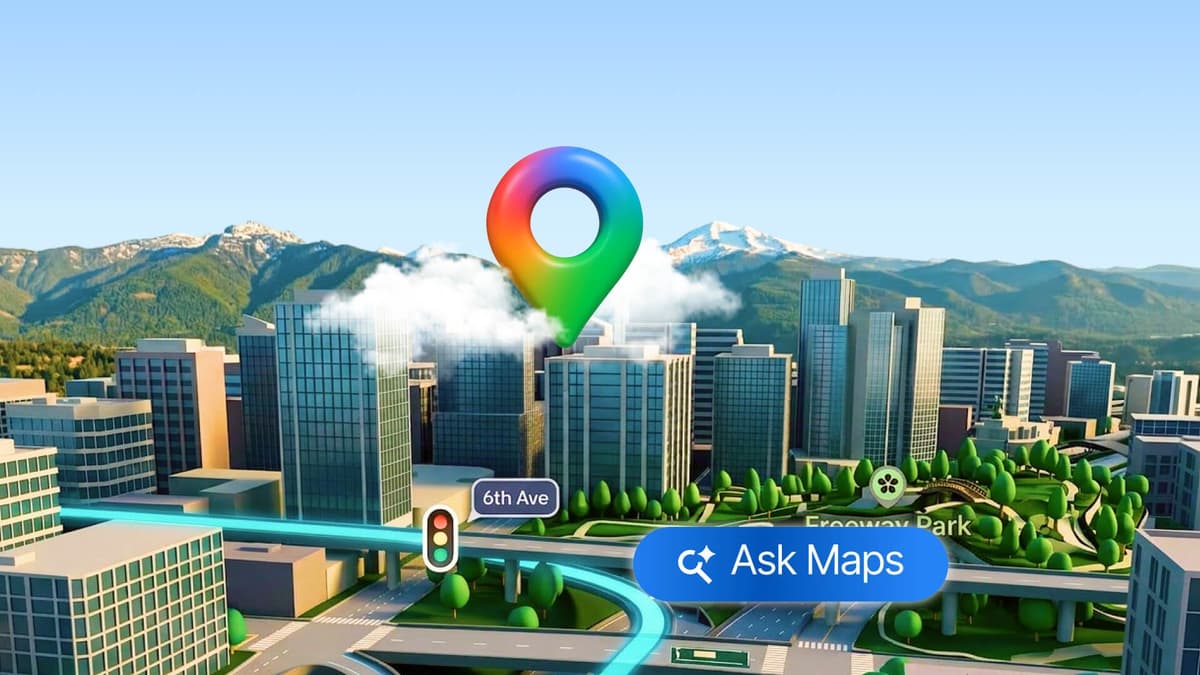
The latest update to Google Maps is not just a feature release.
It represents a shift in how people discover places, evaluate businesses, and make real-world decisions.
Because increasingly, Maps is not just telling you how to get somewhere.
It’s helping decide where you should go in the first place.
And that changes the rules of local discovery.
For years, digital maps were built around a simple task:
Navigation.
Type a destination. Get directions.
But the latest updates from Google signal a different ambition.
Maps is evolving into a context-aware discovery platform - one that interprets intent, analyzes signals, and recommends places based on how people actually live, work, and move through cities.
In other words, Maps is becoming a decision layer for the physical world.
What Actually Changed?
The update introduces several major capabilities:
These changes may feel incremental. But collectively they do something important, they turn Maps into an AI-powered recommendation engine.
Historically, discovery on maps platforms relied on simple inputs:
But AI-driven discovery changes the equation.
Now the system interprets intent. Instead of searching “Coffee shop near me”, people ask:
And the platform determines which businesses best match the experience being requested.
Reviews Become Behavioral Data
Ratings once summarized customer satisfaction. Now reviews serve a different function. They provide contextual language the algorithm can interpret.
For example, when users search for:
“Good places to work remotely”
Maps may prioritize businesses where reviews mention:
Which means reviews are no longer just reputation signals. They are experience descriptors feeding the discovery engine.
Photos Now Communicate Experience
Visual content plays an increasingly important role in how places are interpreted.
Images help the system infer attributes such as:
A listing with diverse, authentic photos provides richer context for both users and algorithms.
In practice, this means the most visible businesses are not always the highest rated. They are the best documented.
Behind the scenes, discovery depends heavily on structured information.
Listings that clearly communicate details such as:
Allow the platform to match businesses to specific user needs.
Incomplete or outdated data does something subtle but significant: It reduces the algorithm’s confidence in recommending the location. And that often translates into lost visibility.
Why This Matters for Businesses?
For many companies, their Maps listing has long been treated as a static directory entry.
But in this new environment, it functions more like a dynamic experience profile.
Every signal, from reviews to images to descriptive attributes, contributes to how the platform understands the business. The more clearly a business communicates its experience, the easier it becomes for the system to recommend it.
This shift introduces an important challenge:
Businesses must understand how consumers describe experiences in their own language.
Market research plays a key role in decoding:
These insights help brands align their digital presence with actual consumer perception.
From Reviews to Insight
Advanced research approaches can turn location data into strategic intelligence. Examples include:
Together, these approaches reveal how the algorithm sees the market.
The Bigger Shift
Platforms like Google are quietly building a layer of AI that interprets the physical world through digital signals.
In this system, businesses are discovered through:
Which means the future of local visibility is not just about being nearby. It’s about being understood.
As AI increasingly mediates real-world decisions, the businesses that gain visibility will be those that communicate their value clearly, consistently, and credibly.
And increasingly, that clarity comes from better insight into how people experience the world.
In the next generation of discovery platforms, consumer understanding will be the most powerful optimization lever.
From Product Performance to Premium Desire
White Space Exploration: Unlocking the Next Frontier of Growth in Emerging U.S. Consumer Markets

Understanding 2025 Corporate Gifting Trends for the Holiday Season

Understanding Consumer Perceptions of Premium Pizza Ingredients