Automotive
Brand Valuation for an Automotive Technology Supplier

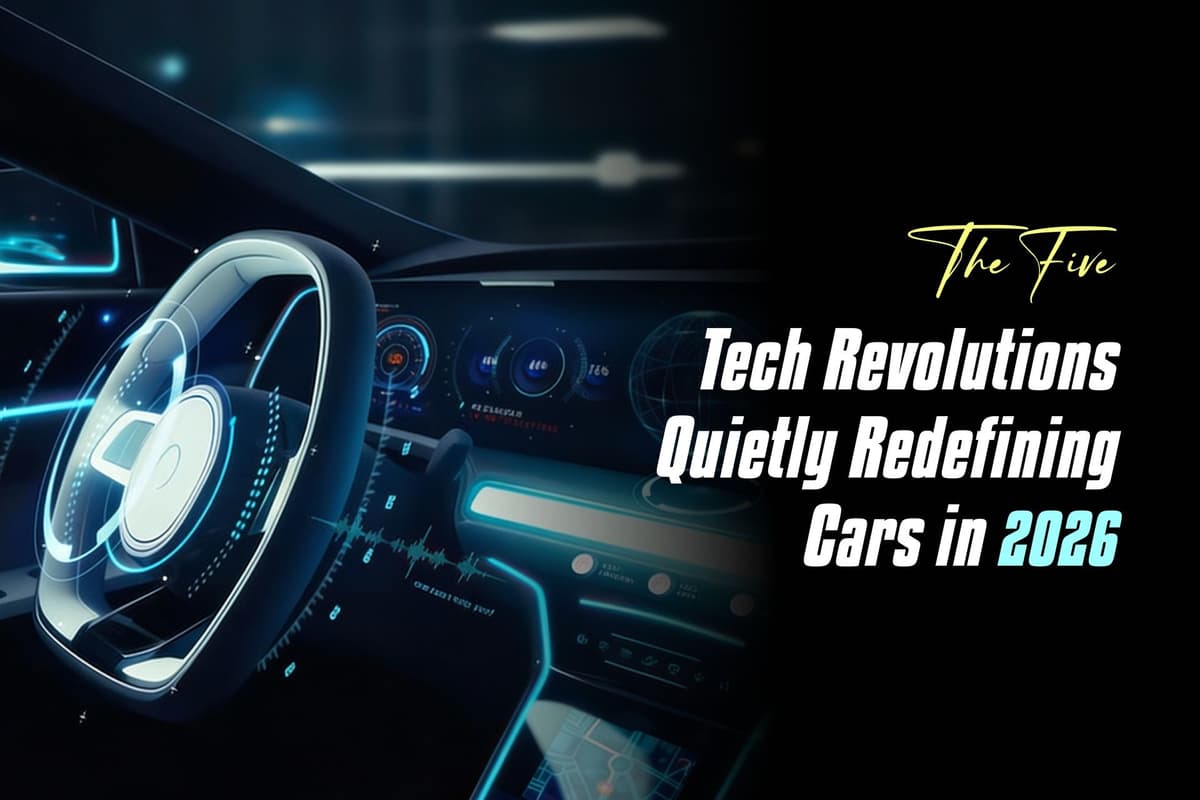
For decades, the automotive industry evolved in predictable steps - a facelift here, a feature upgrade there. But 2026 marks a different kind of moment. Not loud. Not headline-grabbing. More deliberate.
What’s unfolding now is a convergence of electrification, software, connectivity, and design restraint - a shift that’s quietly redefining what a “car” is meant to do, and just as importantly, what it should stop doing.
Across recent automotive work at Jasper Colin, one pattern keeps repeating: consumers aren’t asking for more anymore. They’re asking for clarity. Fewer forced features. Smarter systems. Experiences that feel calm, intentional, and future-ready rather than overloaded.
Here’s how that shift is materializing on the road in 2026.
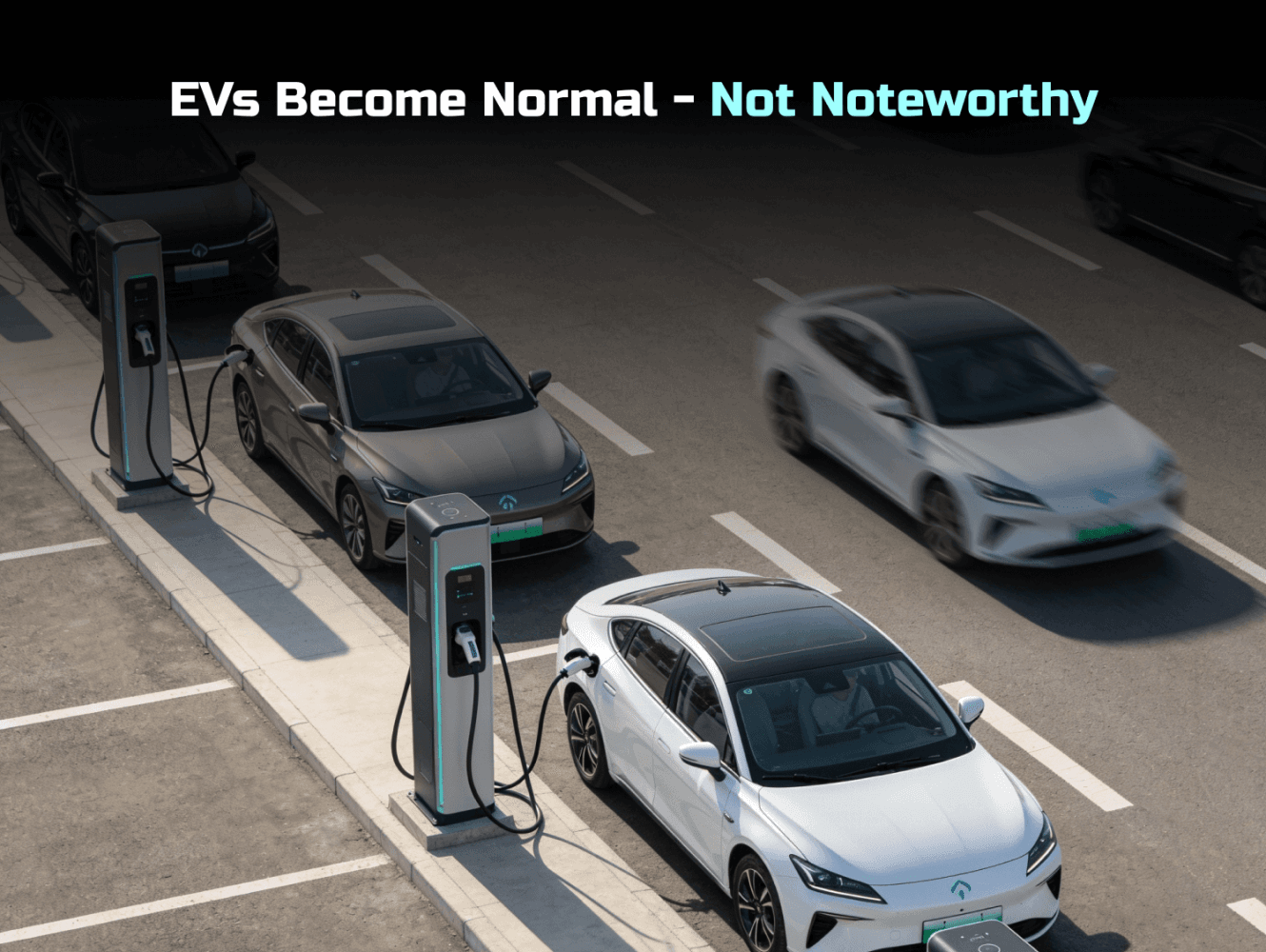
By 2026, electric vehicles are no longer framed as a bold leap into the future. They’re simply part of the everyday consideration set - particularly in premium and upper mid segments, and increasingly in urban mass-market contexts.
What’s changed isn’t just adoption, but expectation. Sustainability is no longer a differentiator or a badge of virtue. It’s assumed. Buyers expect EVs to feel refined, perform effortlessly, and integrate smoothly into daily life - without asking them to relearn how to drive, plan, or live.
This shift first surfaced for us during Charged Up research, where the emotional conversation around EVs moved away from responsibility and toward fit. The question stopped being “Is this the right thing to do?” and became “Does this work for me?”
Battery costs continue to trend downward, bringing EV economics closer to internal combustion vehicles in select segments and regions. Parity hasn’t arrived everywhere - infrastructure, incentives, and income still shape adoption - but by 2026, EVs no longer rely solely on policy support to justify themselves.
Automakers are responding pragmatically. Mercedes-Benz, for example, has publicly moved away from a single-outcome EV narrative toward a flexible, multi-powertrain strategy. With more than 40 launches planned across electric, hybrid, and advanced ICE platforms over roughly 30 months, the message is clear: 2026 is about regional realism, not ideological purity.
EVs aren’t positioned as the future anymore. They’re part of the present - and judged accordingly.
One of the most consequential shifts in 2026 is also one of the least visible.
Cars are no longer static products.
Software-defined vehicles allow features, interfaces, and performance to evolve over time through over-the-air updates. The vehicle you buy is no longer the final version - it’s a platform that improves, adapts, and optimizes post-purchase.
What stood out in our Minimalism in Automotive work, however, is how consumers interpret this shift. They don’t want technology to announce itself. They want capability without cognitive cost.
Software enables exactly that. Complexity moves behind the scenes. Physical clutter reduces. Interfaces simplify. The car becomes more capable while demanding less attention.
For automakers, this also introduces operational discipline. Modular software architectures reduce the need for region-specific hardware variants, allowing the same vehicle to adapt across markets through code rather than components.
In 2026, good software doesn’t feel powerful. It feels invisible.
If software defines what a car can do, connectivity defines what it knows.
By 2026, connectivity increasingly functions as the car’s awareness layer. With maturing 5G networks and selective V2X deployment, vehicles begin responding to their environment in real time - adapting routes, anticipating hazards, and synchronizing with surrounding systems.
This isn’t about constant interaction. It’s about context.
Our Digital Retail Journey research shows that consumers expect continuity across discovery, purchase, ownership, and daily use. The same expectation now extends inside the vehicle: awareness without interruption.
Connectivity also reshapes the cabin. Voice interaction becomes more conversational. Systems anticipate rather than wait for commands. At the same time, cybersecurity shifts from a background concern to an active design requirement.

Brands like Volvo, through deeper Google integration, are pushing toward voice-first, AI-assisted environments that reduce friction rather than add layers.
In 2026, connectivity stops being something drivers manage. It becomes something the car manages for them.
2026 is not the year of universal self-driving cars. And notably, the industry has stopped pretending otherwise.
Instead, autonomy matures where it matters most: well-defined, high-friction scenarios. Highway cruising. Stop-and-go traffic. Automated parking. Long stretches where fatigue, not excitement, defines the driving experience.
Across multiple consumer studies we’ve run, one pattern is consistent: trust matters more than novelty. People don’t want autonomy everywhere. They want it where it clearly earns its place.
Level 3 systems begin transitioning from controlled pilots to regulated, real-world use in select markets. Mercedes-Benz’s DRIVE PILOT certification at higher speeds on parts of the German Autobahn signals this shift toward bounded confidence rather than sweeping claims.
Autonomy in 2026 is less about surrendering control and more about selective relief. A reliable co-pilot beats a bold promise.
By 2026, sustainability is no longer judged solely by what comes out of the tailpipe.
Increasingly, it shows up in how vehicles are designed and built - through lightweight architectures, consolidated manufacturing processes like mega-casting, and interior materials sourced from recycled or bio-based inputs.
A clear signal of this shift can be seen in how leading automakers are rethinking production itself. Tesla’s adoption of giga-casting to replace dozens of stamped and welded parts with single structural castings didn’t just reduce weight - it simplified manufacturing, cut energy use, shortened assembly lines, and lowered long-term complexity. More importantly, it changed how sustainability is embedded: not as a claim, but as an outcome of better engineering. As Dr. Subramani noted during the ChargedUp Insight Series:
It's almost ironic that when you think about EVs, you see them as being synonymous with being eco-friendly because they have lower carbon emissions…having something that is recyclable, along with all these different aspects of EV vehicles, makes them more environmentally friendly…a lot of concerns remain about the carbon footprint of battery production and the source of the electricity that's used for charging…
~ Dr. Subramani | Vice President Research And Development, Renault Nissan Technology & Business Centre India
That lens reframes the conversation. Structural sustainability isn’t just about reducing emissions - it’s about building systems that are efficient, scalable, and economically viable without constant external support. Manufacturing choices that simplify operations, reduce material intensity, and lower long-term costs make sustainability durable rather than decorative.
Traditional OEMs are now selectively adopting similar approaches, pairing modular platforms with material efficiency to improve both environmental and operational resilience - even when those changes remain invisible to the end consumer.
This aligns with a broader recalibration we continue to see across automotive research. Buyers are becoming more skeptical of surface-level “green” signals, and more responsive to sustainability that feels engineered into the product rather than marketed around it.
In 2026, sustainability isn’t louder. It’s engineered in.
A Quieter Definition of Progress
Taken together, these shifts point to a reframing of progress itself.
The defining advantage in 2026 isn’t excess. It’s restraint. Technology works best when it recedes. Design succeeds when it edits. Intelligence matters when it knows when not to intervene.
Cars are becoming calmer. More adaptive. More deliberate.
And in an industry long driven by spectacle, the brands that stand out next won’t be the ones that add the most - but the ones that understand what to leave out.
Brand Valuation for an Automotive Technology Supplier

Global ESG Ratings Research - Understanding How Enterprises Evaluate Sustainability Standards
Competitive Landscape Analysis of Automotive Aftermarket Spare Parts

Evaluating Online Classified Platforms in Automotive Retail