Jasper Colin
Pricing & Packaging Preferences for CRE Data & Workflow Solutions
BFSI

Pricing & Packaging Preferences for CRE Data & Workflow Solutions

A leading provider of Commercial Real Estate (CRE) technology solutions sought to optimize their pricing models and product packaging strategies across data products, analytical tools, and workflow platforms. They needed to understand how executive decision-makers across various CRE stakeholder groups- such as lenders, investors, brokers, and service providers- prioritize solutions, engage with vendors, and assess pricing structures.

Research Approach

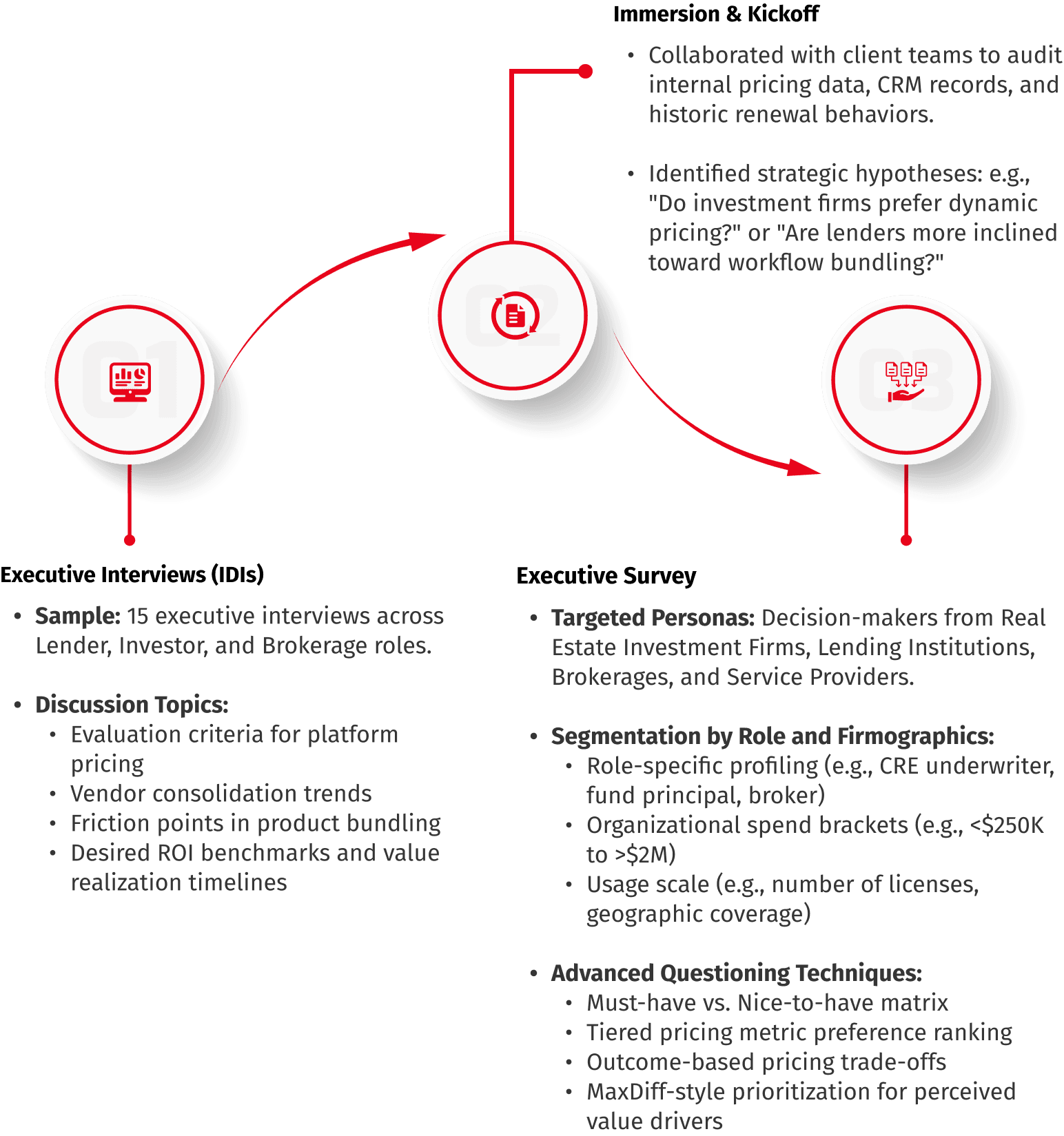
Multi-Method Research

  • Quantitative Surveys (n=1000 qualified respondents): Captured statistically reliable insights on buying preferences, pricing expectations, bundling logic, and purchase decision frameworks across different CRE segments.
  • Qualitative Exploration (Executive Interviews): Conducted in-depth interviews with C-suite and VP-level decision-makers to uncover nuanced motivations, strategic needs, and friction points in the CRE software procurement journey.
     

Vertically Integrated Execution

  • End-to-end ownership of expert recruitment and data collection, ensuring high-quality sample representation across key roles: CRE underwriters, portfolio managers, brokers, analysts, and procurement influencers.
  • Rigorous screening and quota controls ensured inclusion only of decision-makers with pricing familiarity and budget authority.

Methodology Overview

Analytics & Insight Highlights

Strategic Decision Criteria

  • Key Drivers Across Segments:
    • Investors favored flexibility, especially base + modular add-ons tied to AUM or property count.
    • Lenders prioritized underwriting tool bundles and preferred workflow automation priced by volume of CRE loans processed.
    • Brokers demanded clarity, preferring fixed pricing by seat and consistent renewal caps.
       
  • MaxDiff Findings:
    • "Perceived Value" and "Pricing Predictability" emerged as top pricing metric evaluation drivers.
    • Fixed pricing was more preferred by brokers; investors leaned toward outcome-based models tied to investment ROI.

Vendor & Solution Evaluation

  • Awareness and Consideration:
    • Top-used platforms included Trepp, RealPage, Yardi, and CoStar.
    • Tools like GreenStreet and CompStak were frequently evaluated but not always adopted due to pricing opacity or bundle rigidity.
       
  • Purchase Decision Patterns:
    • Buyers showed preference for 1-3 vendor ecosystems over standalone products, signaling opportunity for platform consolidation and upsell packaging.

Decision Process & Influences

  • Internal stakeholders (e.g., underwriting heads, asset managers) had direct influence over tool selection.
  • Peer benchmarking and procurement policies played a strong role at renewal stages.
  • Top 3 reasons for vendor switching at renewal:
    • Lack of innovation
    • Misalignment in pricing scale vs. usage
    • Service/support quality 

Digital & Behavioral Data Integration

  • Product Usage Logs: Linked survey data with real-time tool usage (e.g., login frequency, API call volume).
  • Sales CRM: Mapped buyer intent with pipeline progression, identifying where in the funnel packaging confusion led to drop-offs.
  • Engagement Metrics: Assessed content engagement (e.g., pricing pages, renewal terms) across roles to optimize future pricing documentation.
     

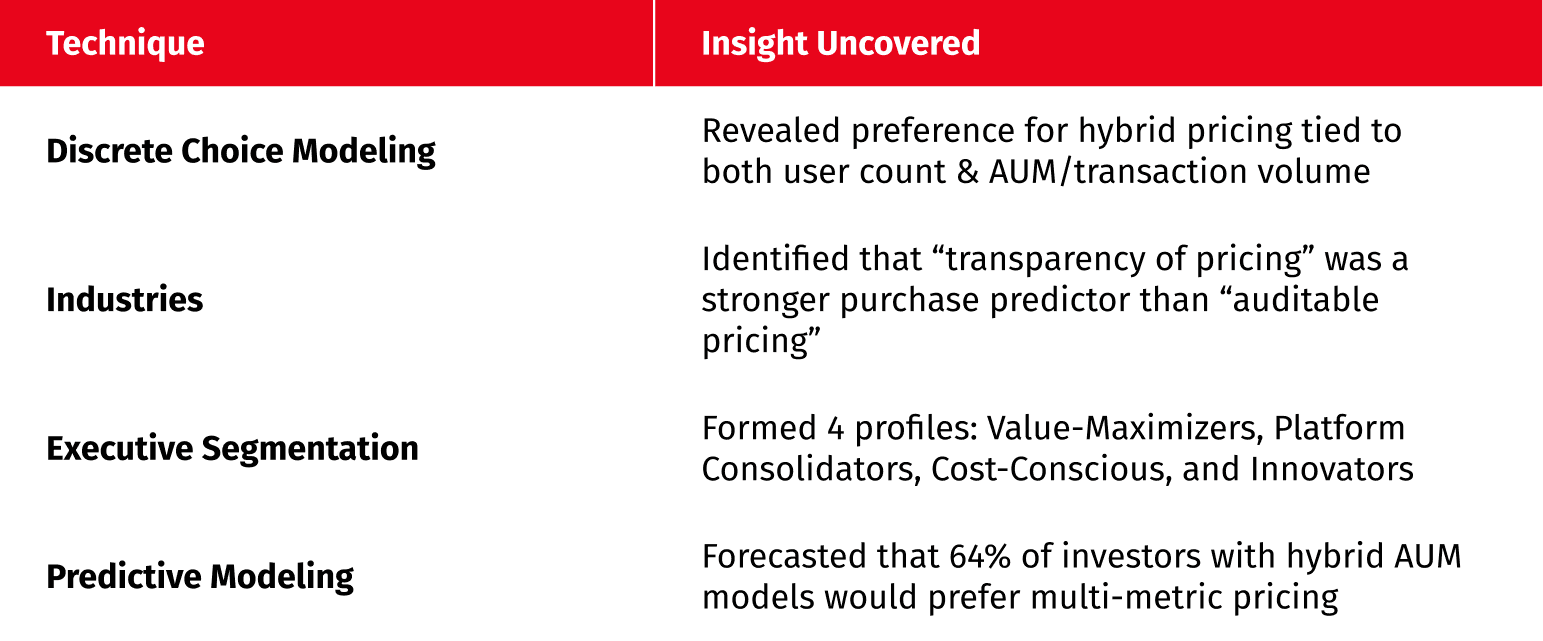
Advanced Analytics Models

Strategic Recommendations

1. Optimize Packaging by Segment

  • Lenders: Workflow-heavy packages with pricing tied to loan volume and underwriting tools.
  • Investors: Analytics-forward bundles with flexible pricing based on AUM or capital deployed.
  • Brokers: Fixed-license models with access to core CRE data and listings.

2. Offer Transparent, Modular Pricing

  • Provide clear unit pricing options (user, property, API calls).
  • Allow for outcome-based pricing trials or success-linked incentive models.

3. Tailor Renewal Strategy

  • Highlight usage-based value delivered in contract discussions.
  • Design 2- to 3-year lock-in options with capped escalators for predictable renewals.

Business Impact

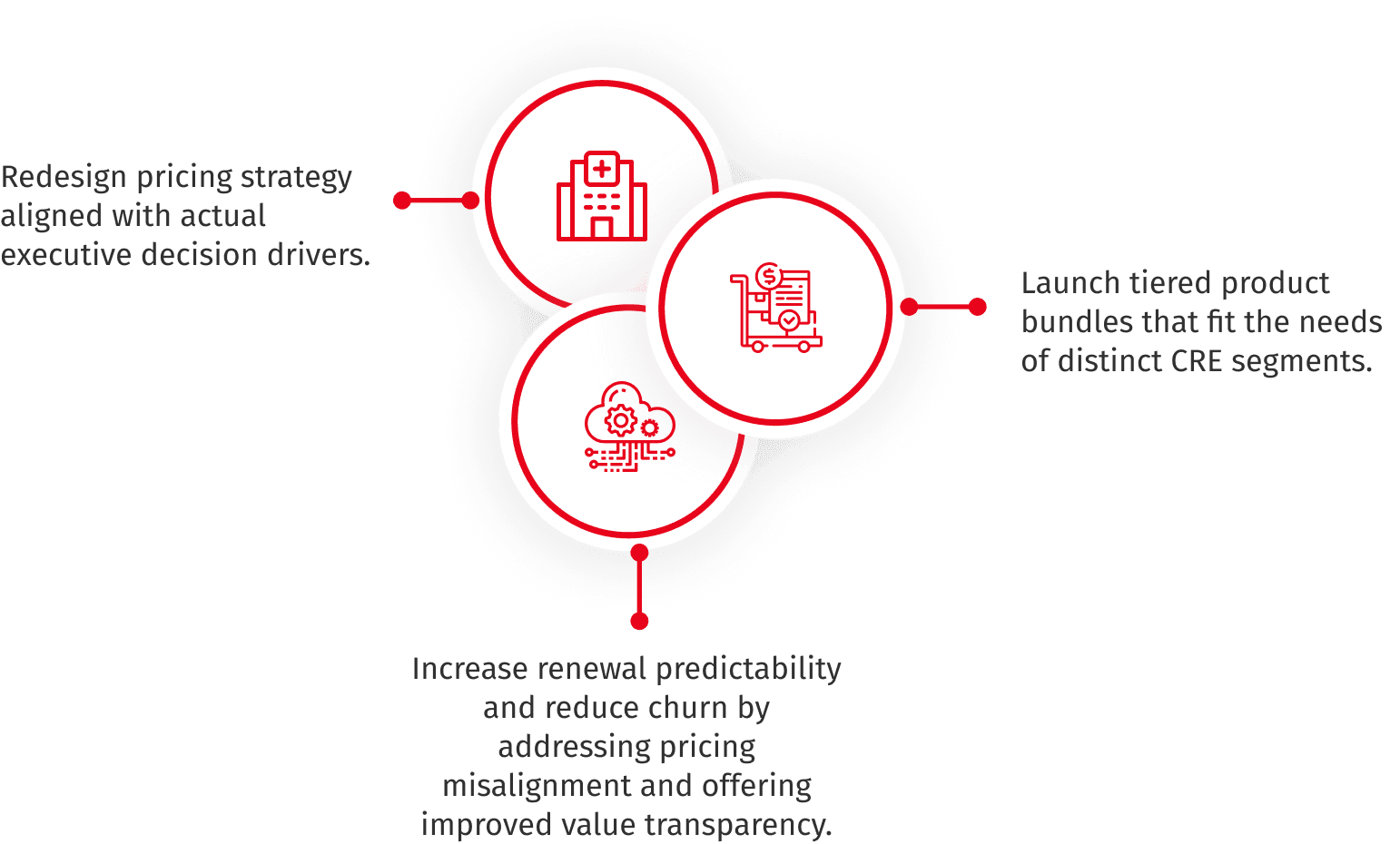
This research enabled the client to:

The executive-aligned insights led to a measurable 18% lift in average contract value in pilot accounts and shortened sales cycles by 12% through clearer bundling communication.

Featured
Case Studies
BFSI

Understanding Brand Perception, Decision-Making Processes, and Key Drivers of Adoption in the Fintech Sector


BFSI

Property & Casualty Insurance Claims Processing Technology Brand Equity Assessment

BFSI

Pricing & Packaging Preferences for CRE Data & Workflow Solutions

BFSI

Financial API Adoption Among UK Finance Teams

We use cookies to improve your browsing experience and to better understand how visitors use our website. By continuing to use this website, you consent to our use of cookies in accordance with our Privacy Policy