Jasper Colin
Financial API Adoption Among UK Finance Teams
BFSI

Financial API Adoption Among UK Finance Teams

A leading fintech platform was exploring the role and reception of financial APIs (providers, integrators, and aggregators) among finance professionals in mid-to-large UK businesses. The objective was to map their awareness, decision journey, and user satisfaction with these platforms- along with broader needs around bulk payments, ERP systems, and AISPs.

Objective

To uncover decision dynamics, integration preferences, platform satisfaction, and usage obstacles around financial APIs and related fintech solutions, with a view to informing GTM strategies, partnership models, and product development priorities.
 

Research Approach & Methodology

1.   Immersion & Stakeholder Hypothesis Building
We reviewed market intelligence and past client insights into API usage trends. Initial hypotheses focused on the perceived friction between IT and Finance departments, limited in-house integration capacity, and unclear aggregator value.

2.   Discovery Interviews
In-depth interviews with IT and finance leaders validated the need for simplified integration models, vendor trust concerns, and the growing influence of non-banking players.

3.   Quantitative Journey Survey
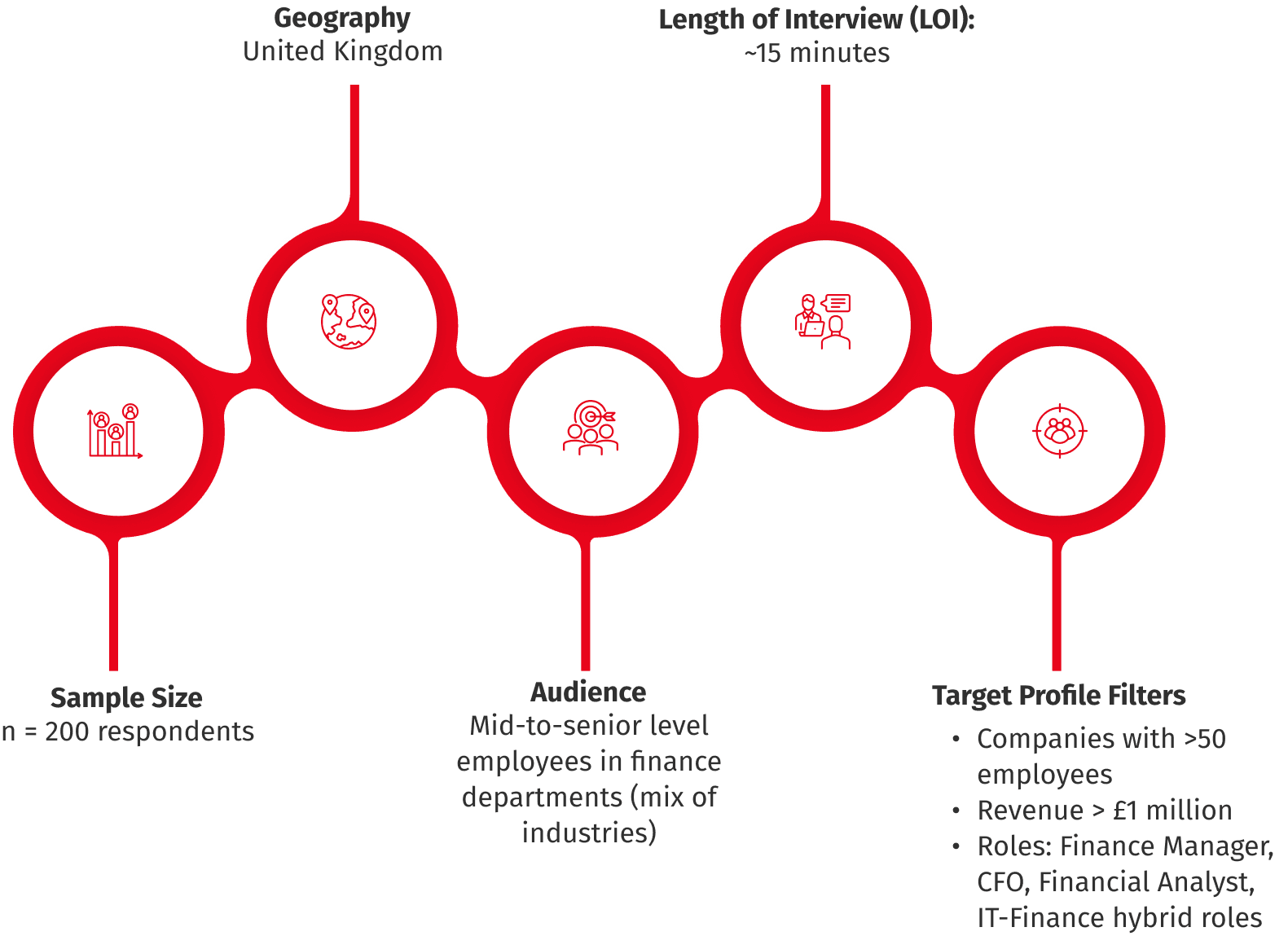
A 15-minute online survey mapped platform adoption, decision-making roles, evaluation criteria, and satisfaction scores across three product groups:

  • API Providers
  • API Integrators
  • API Aggregators

The survey also profiled ERP, OS, and Bulk Payment workflows to contextualize integration challenges.

4.   Behavioral Contextualization
Respondents shared sources of awareness, research behavior, and switching patterns, offering digital proof points to map high-intent behaviors and content influence.

Key Findings

A.   Financial API Providers: Usage & Decision Roles

  • 53% of respondents had active involvement in API provider selection or integration.
  • Top current use cases: Client onboarding (KYC), payments, and account management.
  • Future intent: High consideration for reporting, fraud detection, and cash management APIs. 

B.   API Integrators: Familiarity, Adoption, and Value Drivers

  • Brand Awareness: Microsoft Power Platform, Boomi, and Workato led brand recall.
  • Top motivations for usage:
    • Lack of IT bandwidth (62%)
    • Need for faster integration (56%)
    • Security/authentication management (49%)
  • Preference Drivers: Reputation, customer support, pre-built connectors, and compliance.
  • Satisfaction Scores (5-point scale):
    • Ease of Use: Avg. 4.1
    • Integration Capability: 3.9
    • Documentation: 3.6 

C.   API Aggregators: Low Adoption, High Curiosity

  • Only 22% of respondents actively used aggregators like TrueLayer, Tink, or Yapily.
  • However, 51% showed high likelihood of considering them in the future.
  • Key barriers included low awareness, unclear ROI, and integration duplication fears.

D.   Operating Systems & ERP/TMS Landscape

  • Most-used systems: SAP S/4HANA, Microsoft Dynamics 365, and Oracle JD Edwards.
  • Decision criteria prioritized: Integration compatibility, vendor support, and reporting features.
  • Frustration themes: Scalability, performance lags, and difficult third-party integration. 

E.   Bulk Payments: Modernization in Progress

  • 74% used some form of bulk payment.
  • Most common methods: Online banking platforms and BACS bureau.
  • 38% planned a provider/method change within 12 months.
  • Desired improvements: Monitoring, error handling, and turnaround time. 

F.   AISPs & Financial Data Use Cases

  • Leading AISP brands: Plaid, Tink, Equifax, TrueLayer.
  • Active use cases:
    • Identity verification
    • Spend insights
    • Affordability scoring
  • Top barriers for non-users: Legacy system constraints, ROI concerns, and regulatory uncertainty.
     

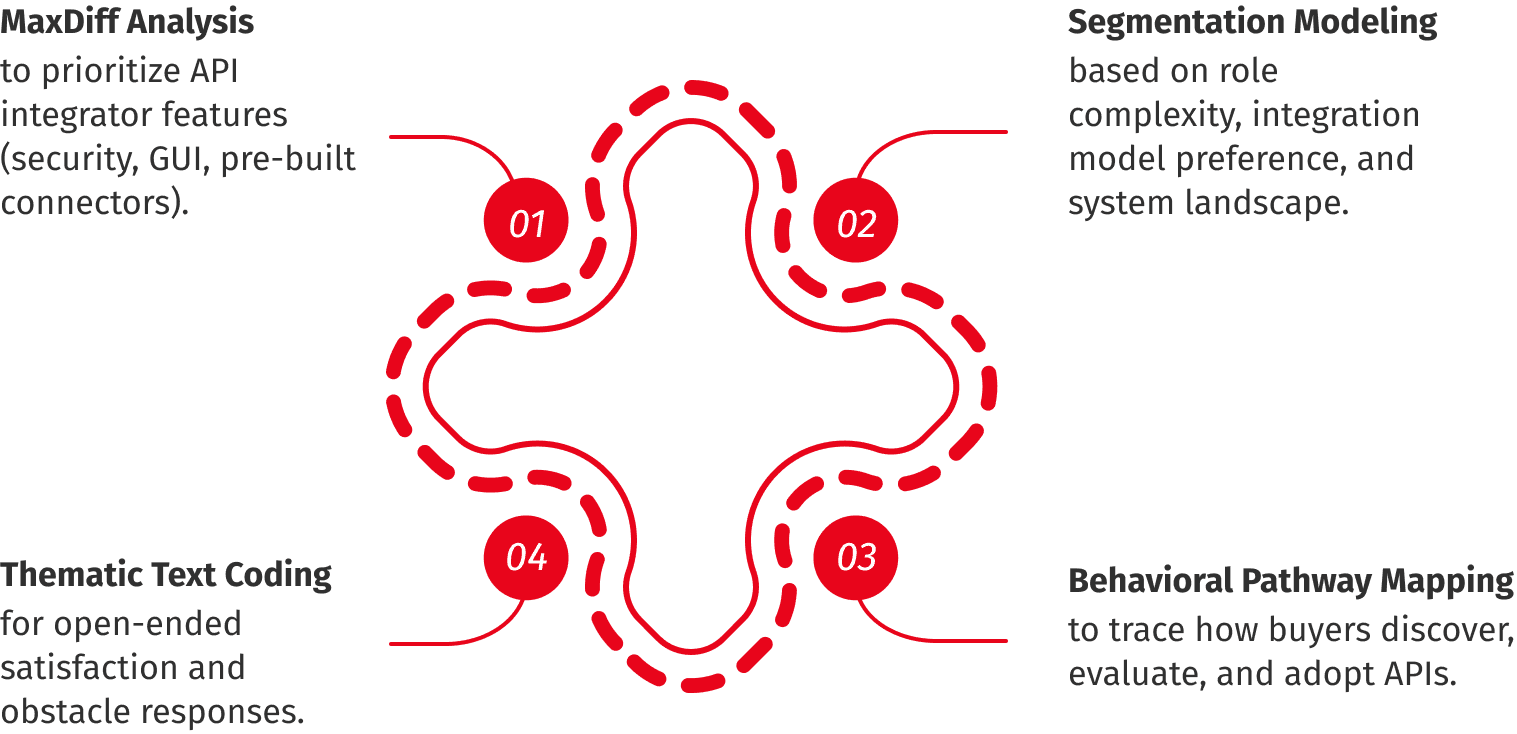
Advanced Analytics Used

Strategic Recommendations

1. Go-to-Market Positioning

  • Position API aggregators as simplifiers of integration complexity, especially for SMB and mid-market finance teams.
  • Use education-led content (e.g., comparison guides, ROI calculators) to overcome awareness and ROI barriers.

2. Partner Alliances

  • Integrators offering ERP-native connectors (e.g., SAP, Microsoft Dynamics) should be prioritized for channel partnerships.
  • Consider co-marketing with core OS providers. 

3. Product Development

  • For integrators: Focus on usability, security compliance, and real-time monitoring modules.
  • For aggregators: Emphasize data normalization value and flexibility across banking rails. 

4. Customer Journey Optimization

  • Map high-friction conversion zones (e.g., documentation gaps, deployment complexity) and deliver tailored onboarding.
  • Align pricing models with usage patterns (e.g., subscription tiers for number of APIs integrated).

Impact

This research enabled the fintech platform to:

  • Refine its product roadmap to align with market needs across multiple finance roles.
  • Position its offerings more competitively in the UK financial software landscape.
  • Shape onboarding and content strategies to address integration challenges, security expectations, and feature prioritization.

The journey map helped connect technical use cases to emotional buying drivers- ultimately creating a narrative around efficiency, control, and trust in enterprise financial API integration.

Featured
Case Studies
BFSI

Understanding Brand Perception, Decision-Making Processes, and Key Drivers of Adoption in the Fintech Sector


BFSI

Property & Casualty Insurance Claims Processing Technology Brand Equity Assessment

BFSI

Pricing & Packaging Preferences for CRE Data & Workflow Solutions

BFSI

Financial API Adoption Among UK Finance Teams

We use cookies to improve your browsing experience and to better understand how visitors use our website. By continuing to use this website, you consent to our use of cookies in accordance with our Privacy Policy

Financial API Adoption Among UK Finance Teams | Jasper Colin