Automotive
Brand Valuation for an Automotive Technology Supplier

Business Challenge
One of the largest automotive technology companies in the world rebranded its name, which involved the abandonment of old identity in favor of a new brand identity. After the rebrand, the Client commissioned a brand valuation study to determine the strength of the new brand amongst its target audience: decision-makers and influencers within High-Performance OEMs.
The research was designed by Jasper Colin to compare the new brand with the major rivals on the levels of awareness, consideration, purchase, loyalty, and brand perception.
320+ | 6 | 20+ |
|---|
Client Background
The Client is a well-established automotive technology firm that provides advanced driver assistance systems (ADAS) and other related parts to international OEM clients. The company went through a major rebranding process whereby it changed its brand name but retained decades of industry experience and a worldwide consumer base.
After the rebrand, the company needed to know:
Methodology
Survey Design
The questionnaire was divided into three parts: screener, brand funnel, and BEVA (Brand Equity Valuation Assessment)
Target Group & Screener Criteria
The respondents had to qualify as per the strict qualification criteria to be relevant:
The departments covered were R&D/Engineering, Procurement, Quality Management, Production, Sales and Marketing, and Logistics. The respondents were between mid-level professionals and C-suite executives.
Competitor Set
The survey had 7 major competitors for brand benchmarking on all essential metrics and included brand logos for recall.
BEVA — Brand Equity Assessment
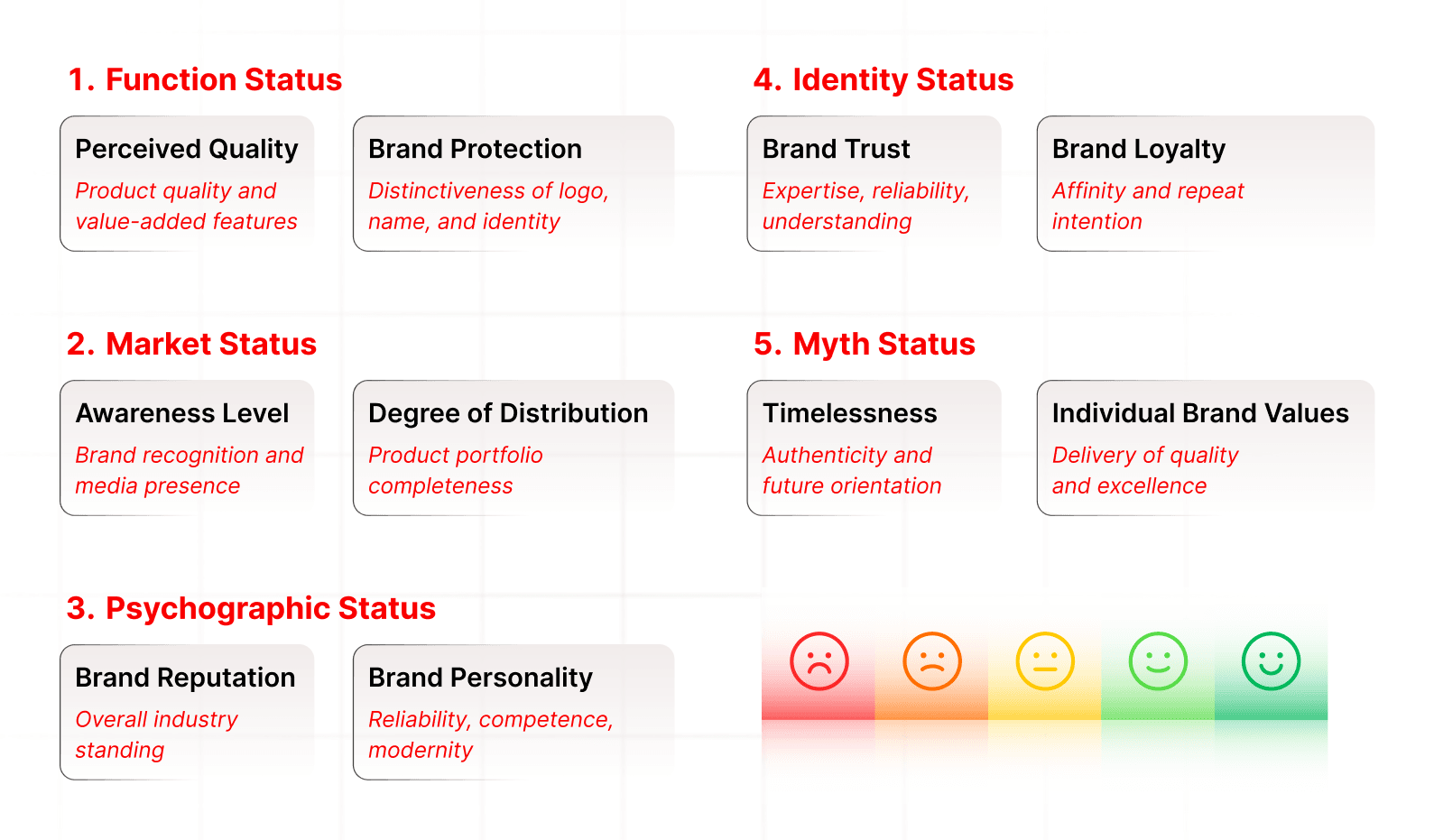
The BEVA model measured the client brand on five hierarchical status levels of function, market, psychographic, identity, and myth on a standardized 1-5 Likert scale. The following table provides a summary of the scores of all 10+ items measured.
Key Takeaways & Recommendations
According to the survey results, the following strategic recommendations were found:
Outlook
The study results gave the client a data-driven, structured baseline of brand equity in its B2B target market right after a significant rebranding. Although there is an inherent difficulty with re-establishing brand recognition following a name change, the Client had significant strengths in reputation, product quality, and customer loyalty among people who are already aware of the brand.
The research revealed definite, practical gaps, especially in the area of market awareness, innovation perception, and tagline recognition, which, when managed strategically, provide a considerable opportunity to increase brand equity and competitive positioning in the global market of OEM suppliers.
It is advisable to conduct a follow-up tracking study 12–18 months after launching the communication initiative to evaluate the success of communication investments and track the development of brand equity over time.
Brand Valuation for an Automotive Technology Supplier

Global ESG Ratings Research - Understanding How Enterprises Evaluate Sustainability Standards
Competitive Landscape Analysis of Automotive Aftermarket Spare Parts

Evaluating Online Classified Platforms in Automotive Retail